
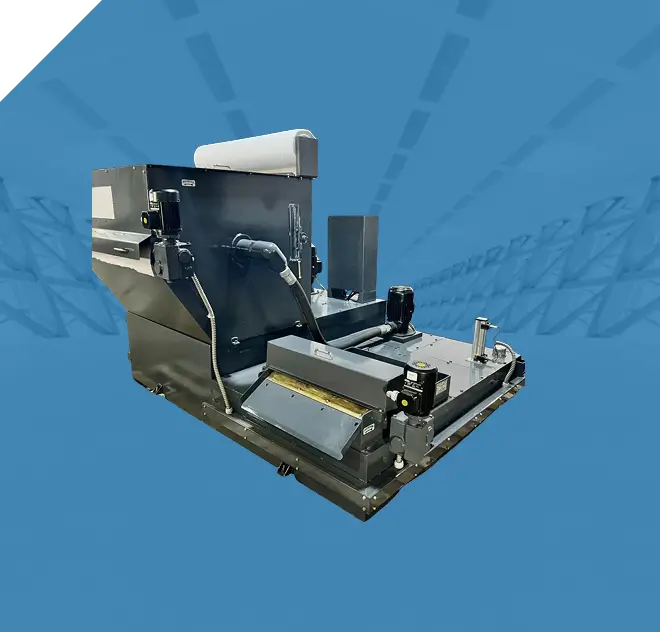
Compact band filters

Compact Band Filters for Efficient Coolant Filtration

Upgrading to a compact band filter offers operational benefits that go far beyond just saving room on the shop floor.


  • Minimized Footprint: The deep-bed design allows the filter to process the same gallons-per-minute (GPM) as a traditional flat-bed filter that is two to three times its size. This frees up valuable aisle space for material handling and operators.
  • Reduced Media Consumption: Because the hydrostatic pressure forces liquid through the built-up sludge, the system can utilize the filter cake longer before indexing forward. This means you will use significantly less filter paper over the course of a year.
  • Purer Coolant: The combination of hydrostatic pressure and the thick filter cake means the fluid returning to your machine’s clean tank is exceptionally pure. This is highly beneficial for surface grinders or tools utilizing high-pressure coolant (HPC) pumps, which are sensitive to fine particulates.
  • Fully Automated Operation: Once the roll is loaded, the system operates unattended. Operators do not need to manually scrape beds or monitor fluid levels, allowing them to focus entirely on machine setup and production.

Ideal Industrial Applications


While compact band filters are versatile, they truly excel in environments where fine particulate buildup is a constant challenge.

1. Surface and Centerless Grinding


Grinding operations produce a dense, blinding sludge rather than typical metal chips. Standard filters clog instantly under this load, but the hydrostatic pressure of a compact filter easily pushes fluid through the grinding swarf.

How It Works


  • Inlet distribution: Dirty coolant enters the filter tray for even spread.
  • Media filtration: A roll of filter paper (band) captures chips and fines as coolant passes through.
  • Auto indexing: Rising liquid level triggers the media to advance, exposing fresh paper.
  • Sludge handling: Spent media lifts out with trapped solids into a bin; clarified coolant returns to the tank.
  • Optional enhancements: Magnetic pre-filter, vacuum box, and tramp oil skimmer boost performance.

2. High-Volume CNC Machining


For turning and milling centers working with cast iron or producing fine aluminum chips, a compact band filter seamlessly integrates with the machine’s primary chip conveyor to handle the secondary, finer filtration.

Applications


  • Grinding: Surface, cylindrical, centerless, creep‑feed (with magnetic pre-stage).
  • CNC machining: Turning, milling, drilling, tapping—especially aluminum and cast iron.
  • Gear manufacturing: Hobbing, shaping, and grinding lines.
  • Parts washing and rinse tanks: Aqueous cleaners with particulate load.
  • Central coolant systems: As a polishing stage after magnetic/cyclonic separation.

3. Industrial Parts Washing


Automated parts washers generate a steady stream of dirt, grease, and metallic dust. Compact band filters maintain the integrity of the alkaline wash fluid, ensuring precision parts come out spotless.

Selection Guide


  • Flow rate: Peak return flow (L/min) with 20–30% headroom.
  • Solids load and material: Grinding haze vs mixed chips; aluminum, cast iron, or steel.
  • Target clarity: Choose media micron rating; add magnet/vacuum for sub‑20 µm goals.
  • Footprint and layout: Inlet height, return line, service access for media roll changes.
  • OPEX strategy: Balance consumable use vs clarity; magnets and hydrocyclones lower media spend.
  • Integration: Compatible with existing tanks, skimmers, chillers, and PLCs.
  • Environmental compliance: Plan for dry sludge handling and proper disposal.

Installation Best Practices


  • Feed evenly across the band; use a distribution weir to prevent channeling.
  • Place a magnetic separator upstream for ferrous-heavy processes.
  • Set float switch/differential level to index before bypass occurs.
  • Use quality media matched to coolant type (emulsion, synthetic, straight oil).
  • Provide a drain‑back sludge bin to recover coolant from spent paper.

Maintenance Tips


  • Check media tracking and take‑up tension for straight, wrinkle‑free advance.
  • Inspect seals and wipers to avoid bypass around the band.
  • Monitor differential level and paper consumption trends to spot overloads.
  • Clean trays and vacuum plenums (if fitted) on a fixed schedule.
  • Verify coolant concentration, pH, and temperature for stable filtration.

Performance Expectations

  • Typical clarity: 10–50 µm with standard media; finer with vacuum assist and magnetic pre‑stage.
  • Paper savings: 30–60% reduction with magnetic pre‑filtration, depending on ferrous load.
  • Uptime: Automatic indexing supports continuous shifts with minimal operator attention.


Why Choose Our Compact Band Filters


  • Space-saving designs: High flow capacity in compact footprints for brownfield retrofits.
  • Rugged build: Corrosion‑resistant tanks, reliable drives, and industry‑proven controls.
  • Lower OPEX: Optimized media paths plus optional magnetic/hydrocyclone stages.
  • End‑to‑end support: Sizing, installation, commissioning, AMCs, and rapid spares across India.
  • Fast ROI: Savings from reduced tool wear, fewer cleanouts, and less media consumption.

Frequently Asked Questions (FAQ)

What is the difference between a compact band filter and a standard gravity bed filter?

The primary difference is the shape of the filter bed. A standard gravity filter has a shallow, flat bed that takes up a lot of horizontal space. A compact band filter features a deep, angled bed. This depth utilizes the weight of the liquid to increase flow rates, allowing a much smaller machine to do the exact same amount of work.

Do I need to buy a specific type of filter paper for a compact system?

Yes. Because the liquid pool is deeper and heavier, and the sludge builds up thicker, you generally need a filter paper roll with higher wet tensile strength. If you use a thin, lightweight paper (like a 15 GSM or 20 GSM non-woven fabric) in a deep-bed filter, the weight of the swarf and liquid can tear the paper as the motor tries to pull it out of the trough. A heavier-weight polyester or heavy-duty polypropylene blend is usually recommended.

How do I size a compact band filter for my machine tool?

Proper sizing depends on three factors: the maximum flow rate of your coolant pump (measured in gallons or liters per minute), the viscosity of the liquid (water-soluble coolant flows faster than thick cutting oil), and the type of material you are machining. A high-viscosity oil combined with fine grinding sludge will require a larger unit than a water-based coolant handling larger steel chips.

Can a compact band filter handle large, stringy chips?


No. Band filters are designed for fines, swarf, and sludge, not massive, bird-nest chips from heavy turning or milling. If your machine produces large, stringy chips, you must use a standard chip conveyor (like a hinge belt conveyor) to remove the large scrap first. The compact band filter should be placed after the conveyor to clean the remaining fine particulates out of the coolant.

Contact

Interested in learning more or need a custom solution?

Mag Tools

B-465, Industrial Estate 2nd Gate, Gokul Road, Hubli, 580030 (Karnataka )

Phone Number

Phone: +91-836-2335990
Fax : +91-836-2332297
Cell : +91-93434-03619
Cell 2 :+91-9880-666722

Email Address

Mr. A.T. Pawar: atpawar@magtoolsindia.com
Mr.Tushar Pawar: tushar@magtoolsindia.com

Get in Touch