
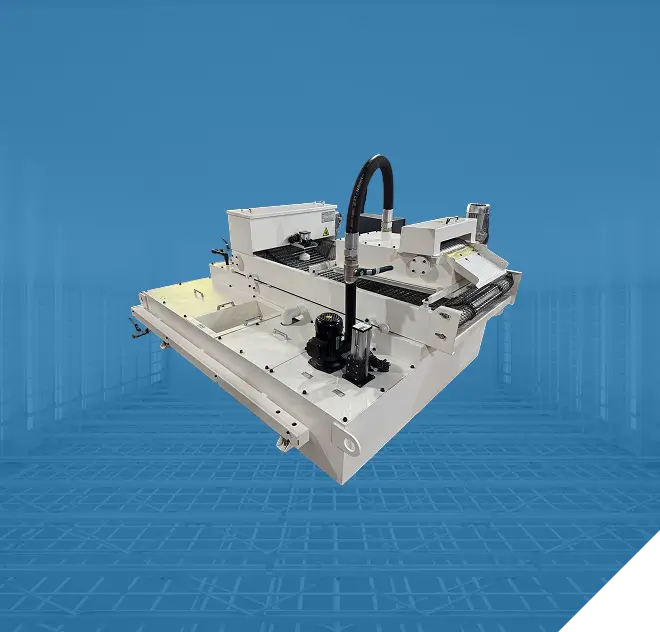
“Paper band filter” and “gravity bed filter” are two names for the same trusted technology: a highly reliable, automated system designed to remove abrasive swarf, metal fines, and tramp oils from industrial metalworking fluids. By using disposable filter paper media to continuously clean coolant and straight oils, these systems prevent contaminated fluid from damaging expensive machine tools and degrading part quality.
Whether you are running a single CNC lathe or piping a centralized coolant trench for an entire factory floor, gravity bed filtration provides a scalable, cost-effective foundation for your fluid management strategy.
The enduring popularity of these systems comes down to their mechanical simplicity. Instead of relying on high-pressure pumps to force fluid through a barrier, they leverage natural hydrostatic pressure for gentle, highly efficient particle separation.
Upgrading from basic tank screens or manual skimming to an automated paper band filter delivers compounding returns across your entire facility.
A gravity bed filter is only as effective as the media running through it. Tailoring the disposable paper roll to your specific machining application is critical. Cellulose/viscose blends offer high flow rates for standard water-soluble coolants, while synthetic media like polyester (PET) or polypropylene (PP) provide the chemical resistance and strength required for straight cutting oils or aggressive chemical environments.
For facilities machining heavy volumes of cast iron or high-speed steel, gravity bed filters are frequently paired with a magnetic separator. Positioned over the intake, a rotating magnetic drum naturally pulls up to 90% of the ferrous particulates directly out of the dirty fluid. The downstream paper band filter is then only responsible for capturing the remaining non-magnetic alloys, tramp oils, and ultra-fine grit. This hybrid approach drastically reduces paper consumption and keeps consumables costs extremely low.
A gravity bed filter is only as effective as the media running through it. Tailoring the disposable paper roll to the specific machining application is critical for balancing fluid clarity with media consumption rates.
For facilities processing heavy volumes of cast iron, carbon steel, or high-speed steel, relying solely on paper media can result in high consumable costs as the paper indexes constantly to keep up with the heavy swarf load.
To solve this, gravity bed filters are frequently integrated with a magnetic separator. Positioned over the intake header, a rotating magnetic drum naturally pulls 80% to 90% of the ferrous particulates directly out of the dirty fluid before it ever reaches the paper. The paper band filter is then left to do what it does best: capture the remaining non-magnetic alloys, tramp oils, and ultra-fine grit, polishing the fluid to near-perfect clarity while extending the lifespan of a single roll of paper by weeks or even months.
Because they can be scaled from compact, standalone units serving a single CNC lathe to massive, centralized coolant trenches managing an entire factory floor, paper band filters are incredibly versatile. They are essential equipment for:
There is no physical or mechanical difference. “Paper band filter” refers to the continuous roll of media used, while “gravity bed filter” refers to the method of fluid separation. They are interchangeable terms for the exact same filtration system.
A filter cake is the layer of swarf, chips, and grit that builds up on top of the filter paper. As it thickens, it creates a much tighter filtration matrix than the paper alone, capturing much finer microscopic particles before the paper triggers an index shift. Without the filter cake, you would require much tighter, more restrictive paper that would blind off too quickly.
Media consumption depends entirely on your material removal rate, the type of metal being cut, the micron rating of the paper, and your fluid flow rate. A localized filter on a single milling machine might use one roll every few months, while a central system handling heavy grinding sludge might index through a roll in a few weeks. Adding a magnetic pre-filter drastically extends roll lifespan for ferrous applications.
Yes, but the viscosity of the fluid dictates the setup. Straight oils require coarser filter paper made from synthetic materials (like polyester) that will not degrade chemically. The system also physically requires a larger bed area to process high-viscosity oil compared to an equal volume of water-soluble coolant.
Maintenance is minimal. Operators simply need to empty the dry sludge bin and replace the paper roll when it runs out. Routine preventative maintenance includes inspecting the drive chain tension, ensuring the float switch moves freely, and occasionally flushing the clean fluid reservoir during major plant shutdowns.
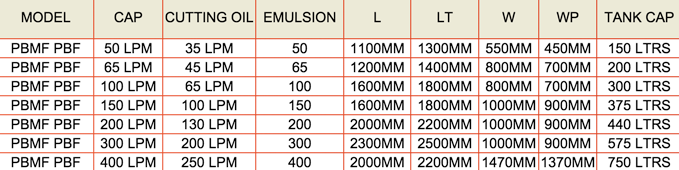
1.(MODEL PBF- PBMF)
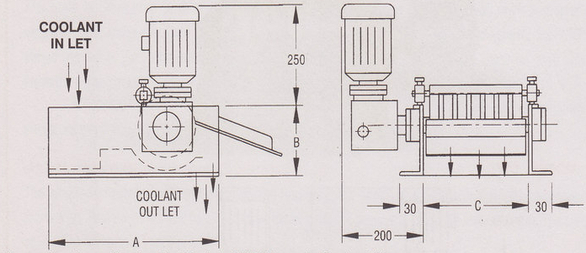
2. DIMENSIONAL DETAILS OF SLOTTED TYPE MAGNETIC COOLANT FILTER
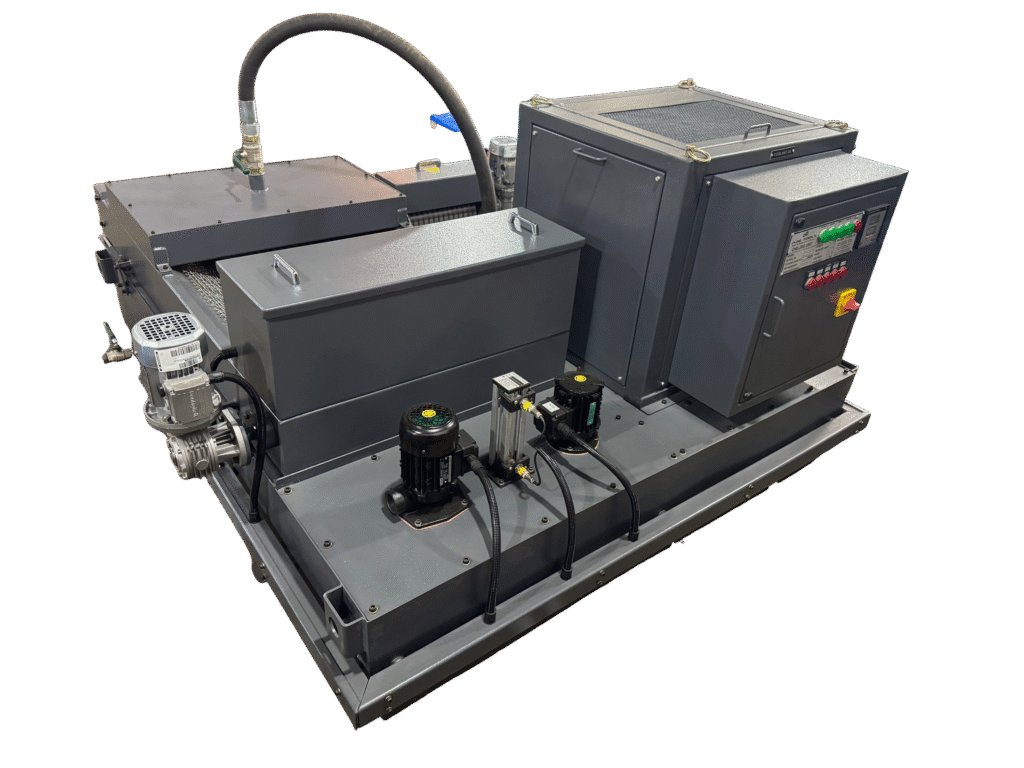
PAPER BAND COOLANT FILTRATION SYSTEM WITH 3 TON DIP IN CHILLER FOR GRINDING MACHINES
B-465, Industrial Estate 2nd Gate, Gokul Road, Hubli, 580030 (Karnataka )
Phone: +91-836-2335990
Fax : +91-836-2332297
Cell : +91-93434-03619
Cell 2 :+91-9880-666722
Mr. A.T. Pawar: atpawar@magtoolsindia.com
Mr.Tushar Pawar: tushar@magtoolsindia.com