
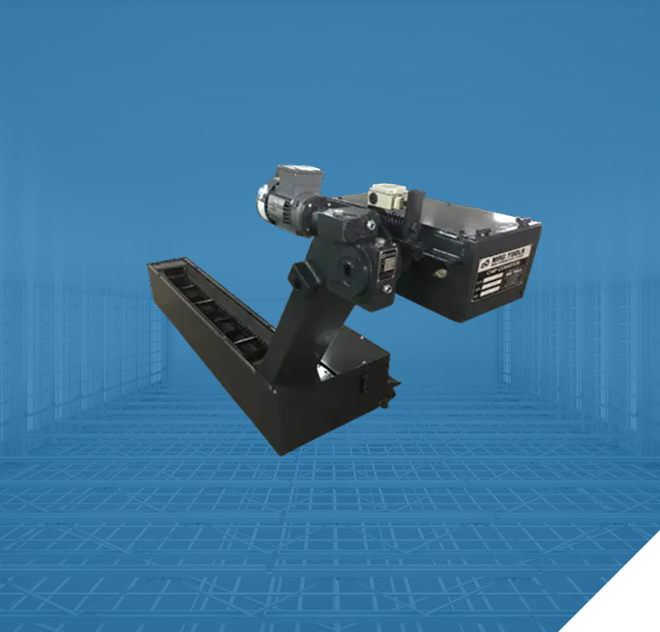
Scraper conveyors

When industrial facilities need to move heavy, abrasive, or dusty bulk materials, standard belt conveyors often fall short. For rugged, high-volume material handling, mechanical dragging systems are the industry standard.

A scraper conveyor (often referred to as a drag chain conveyor) is a highly robust mechanical system designed to push bulk materials through an enclosed trough. Known for their durability and dust-tight operation, these conveyors are essential in mining, agriculture, power generation, and heavy manufacturing.


This guide covers how scraper conveyors work, the different variations available, and how to determine if one is the right fit for your facility.

What is a Scraper Conveyor?

A scraper conveyor moves bulk material using a continuous chain equipped with flights (or scrapers). This chain is driven by a motor and sprockets, dragging the scrapers along the bottom of a stationary steel trough. As the scrapers move, they push the bulk material forward toward a discharge point.


Because the material is pushed rather than carried, these conveyors are exceptionally effective at moving difficult solids, including hot, abrasive, toxic, or wet materials.

Key Components


  • Trough / Casing: The stationary outer shell, usually made of heavy-gauge steel or abrasion-resistant alloys, that houses the chain and material.
  • Chain: An endless loop of heavy-duty chain (often forged or drop-forged) that withstands high tension and friction.
  • Flights (Scrapers): Blade-like attachments fixed to the chain. They match the profile of the trough and physically push the material.
  • Drive and Tail Sprockets: The toothed wheels at either end of the conveyor. The drive sprocket pulls the chain, while the tail sprocket keeps it aligned and tensioned.
  • Drive Unit: The electric motor and gearbox that provide the torque required to pull heavy material loads.

Types of Scraper Conveyors

While the core principle remains the same, scraper conveyors are categorized based on their casing shape and the exact way they move material.

1. Standard Drag Chain Conveyors

The most heavy-duty and traditional form of a scraper conveyor. The flights drag along the bottom of a rectangular trough, moving heavy layers of abrasive goods.

  • Best for: Bottom ash handling in power plants, coal mining, wood chips, and heavy ores.
  • Key feature: Highly resistant to wear and tear due to the use of manganese or hardened steel chains.

2. En-Masse Conveyors

Instead of scraping a shallow layer of material, en-masse conveyors submerge the chain completely in the bulk material. Because the particles of the material interlock, the friction between the particles is greater than the friction against the trough walls. The material moves collectively as a single, solid column.

  • Best for: Free-flowing materials like grain, fly ash, chemical powders, and cement.
  • Key feature: Extremely space-efficient and capable of conveying materials vertically or at steep inclines without spilling back.

3. Tubular Drag Conveyors

A variation where the chain and circular discs (flights) run through a fully enclosed pipe or tube.


  • Best for: Food processing, fragile materials (like coffee beans or easily bruised pet food), and hazardous chemicals.
  • Key feature: The absolute highest level of dust containment and the ability to route through complex, multi-directional horizontal and vertical paths.

Major Industrial Applications

Scraper conveyors are versatile, but they dominate specific sectors where other conveyors fail:


  • Mining & Minerals: Used heavily underground as Armored Face Conveyors (AFCs) to move freshly mined coal away from the shearer.
  • Energy & Power Generation: Safely moving hot, abrasive bottom ash and fly ash away from boilers and incinerators.
  • Agriculture & Grain Handling: Loading and unloading silos at high speeds. The enclosed nature keeps grain dust contained, minimizing explosion risks.
  • Biomass & Forestry: Moving irregular, fibrous materials like sawdust, bark, and wood chips without jamming.

Advantages of Using Scrap Conveyors

Upgrading to a scraper conveyor solves several common bulk material handling challenges:


  • Dust-Tight and Weatherproof Operation: The enclosed trough design prevents toxic dust from escaping into the facility and protects the conveyed product from external contamination and moisture.
  • High Temperature and Abrasive Resistance: Unlike rubber belts, steel scrapers and chains can handle materials exceeding 1,000°F (537°C), making them ideal for foundry and boiler applications.
  • Space Efficiency: Scraper conveyors can be installed at steep inclines—up to 90 degrees in the case of en-masse conveyors—saving valuable floor space compared to the gentle inclines required by belt conveyors.
  • Multi-Point Loading and Discharging: Troughs can be fitted with multiple inlet chutes and discharge gates, allowing operators to distribute material to several different silos or processing lines from a single conveyor.

How to Choose the Right Scraper Belt Conveyor

Specifying a drag conveyor requires precise calculations to prevent rapid wear and chain failure. Consider these factors during the design phase:


  1. Material Characteristics: Is the material free-flowing, sticky, highly abrasive, or fragile? This determines whether you need a standard drag, en-masse, or tubular conveyor.
  2. Material Density: The bulk density (lbs/ft³ or kg/m³) of your material directly dictates the horsepower required by the motor and the tensile strength needed for the chain.
  3. Throughput Requirements: Calculate the maximum volume (tons per hour) you need to move. Overloading an undersized conveyor will snap the chain or stall the motor.
  4. Casing Material: For abrasive materials like silica sand or clinker, specify trough bottoms lined with AR (Abrasion Resistant) steel or basalt plates to extend the equipment’s lifespan.

Frequently Asked Questions (FAQ)

What is the difference between a scraper conveyor and a belt conveyor? A belt conveyor carries material resting on top of a moving rubber or fabric belt. A scraper conveyor pushes material through a stationary metal trough using an internal chain and blade system. Belt conveyors are better for long-distance, high-speed, gentle transport, while scraper conveyors excel at moving heavy, hot, or abrasive materials in enclosed spaces.

Can scraper conveyors go around corners? Standard rectangular drag conveyors generally travel in straight lines, though they can handle gradual vertical bends (e.g., transitioning from horizontal to a 30-degree incline). If complex, multi-directional 3D routing is required, a tubular drag conveyor is the appropriate choice.


Why did my scraper conveyor chain break? Chain failure is usually caused by excessive wear and lack of tension. If the chain is too loose, it can jump the sprocket; if it is too tight, it places excess strain on the motor and chain pins. Introducing material that contains unexpected large debris (tramp metal) can also jam the scrapers and snap the chain. Periodic tension adjustments are critical.

Contact

Interested in learning more or need a custom solution?

Mag Tools

B-465, Industrial Estate 2nd Gate, Gokul Road, Hubli, 580030 (Karnataka )

Phone Number

Phone: +91-836-2335990
Fax : +91-836-2332297
Cell : +91-93434-03619
Cell 2 :+91-9880-666722

Email Address

Mr. A.T. Pawar: atpawar@magtoolsindia.com
Mr.Tushar Pawar: tushar@magtoolsindia.com

Get in Touch