
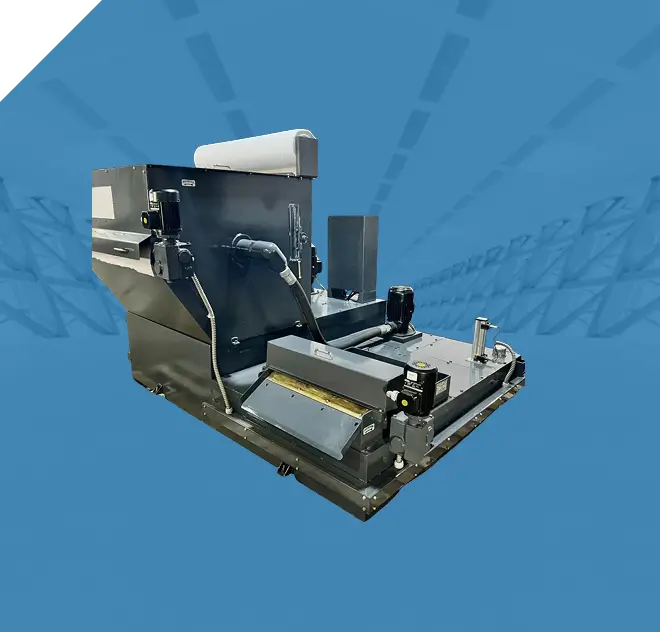
Upgrading to a compact band filter offers operational benefits that go far beyond just saving room on the shop floor.
While compact band filters are versatile, they truly excel in environments where fine particulate buildup is a constant challenge.
Grinding operations produce a dense, blinding sludge rather than typical metal chips. Standard filters clog instantly under this load, but the hydrostatic pressure of a compact filter easily pushes fluid through the grinding swarf.
For turning and milling centers working with cast iron or producing fine aluminum chips, a compact band filter seamlessly integrates with the machine’s primary chip conveyor to handle the secondary, finer filtration.
Automated parts washers generate a steady stream of dirt, grease, and metallic dust. Compact band filters maintain the integrity of the alkaline wash fluid, ensuring precision parts come out spotless.
The primary difference is the shape of the filter bed. A standard gravity filter has a shallow, flat bed that takes up a lot of horizontal space. A compact band filter features a deep, angled bed. This depth utilizes the weight of the liquid to increase flow rates, allowing a much smaller machine to do the exact same amount of work.
Yes. Because the liquid pool is deeper and heavier, and the sludge builds up thicker, you generally need a filter paper roll with higher wet tensile strength. If you use a thin, lightweight paper (like a 15 GSM or 20 GSM non-woven fabric) in a deep-bed filter, the weight of the swarf and liquid can tear the paper as the motor tries to pull it out of the trough. A heavier-weight polyester or heavy-duty polypropylene blend is usually recommended.
Proper sizing depends on three factors: the maximum flow rate of your coolant pump (measured in gallons or liters per minute), the viscosity of the liquid (water-soluble coolant flows faster than thick cutting oil), and the type of material you are machining. A high-viscosity oil combined with fine grinding sludge will require a larger unit than a water-based coolant handling larger steel chips.
No. Band filters are designed for fines, swarf, and sludge, not massive, bird-nest chips from heavy turning or milling. If your machine produces large, stringy chips, you must use a standard chip conveyor (like a hinge belt conveyor) to remove the large scrap first. The compact band filter should be placed after the conveyor to clean the remaining fine particulates out of the coolant.
B-465, Industrial Estate 2nd Gate, Gokul Road, Hubli, 580030 (Karnataka )
Phone: +91-836-2335990
Fax : +91-836-2332297
Cell : +91-93434-03619
Cell 2 :+91-9880-666722
Mr. A.T. Pawar: atpawar@magtoolsindia.com
Mr.Tushar Pawar: tushar@magtoolsindia.com